
Nobody has ever left a comment about a sensor. They leave comments about faces they can see and words they can hear, and both of those are free.
Here is what actually separates a video that looks amateur from one that does not, in the order it matters.
One. Light, and it is not close
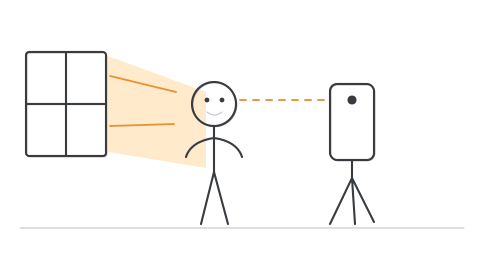
Point your face at the largest source of daylight in your house and put the phone between you and it. That is the whole technique. A window at eleven in the morning is a better light than most of what you can buy.
Two things ruin it. A window behind you, which turns you into a silhouette and makes the phone give up on your face. And a ceiling tube light directly overhead, which puts shadows under your eyes and nose and makes everyone look tired.
If you can only shoot at night, sit close to one lamp, off to the side, not above. One soft source beats three harsh ones.
Two. Sound, which people forgive less than picture
A slightly soft picture is watchable. Echoing, hissing audio is not, and people scroll away from it without knowing why.
You do not need a microphone yet. You need to be within an arm's length of the phone, in a room with soft things in it. Curtains, a bed, cushions, clothes. An empty room with tiled floors is an echo chamber, which is why kitchens and staircases sound so bad. Switch the fan off for the take. Turn it back on between takes.
Bad light looks cheap. Bad sound makes people leave.
Three. Where the camera sits
Phone at eye height, not on your chest looking up. Lens level with your eyes, a little more than an arm away. Leave a small gap above your head and put your eyes about a third of the way down the frame.
Prop it against a stack of books if you do not own a tripod. Every creator you follow started on books.
Four. Where you look
At the lens. Not at your own face on the screen, which is what everybody does, and which reads to the viewer as somebody avoiding their eyes.
Put a small dot of tape beside the lens if you keep drifting. It works, and it is the single fastest improvement most people can make to how they come across.
What to clean up before you press record
- Wipe the lens. It has been in your pocket all day.
- Look behind you once. A clear wall is better than a busy room.
- Lock the exposure so the picture stops brightening and darkening while you speak.
- Do not zoom. Move closer instead.
- Record one line as a test and listen back with the volume low. If it is hard to follow quietly, it is hard to follow at all.
The real reason first videos look bad
Not the phone. The flinch. People shoot from further away than they should, in a voice quieter than their own, looking slightly away from the lens, and the result is a video that seems to be apologising for existing.
That goes with repetition and nothing else. The tenth is not braver than the first because you learned a setting. It is braver because you have done it nine times.
The shooting day is day seven, and it is a live shoot on your own phone, in the room, that day. Nobody watches somebody else do it.